
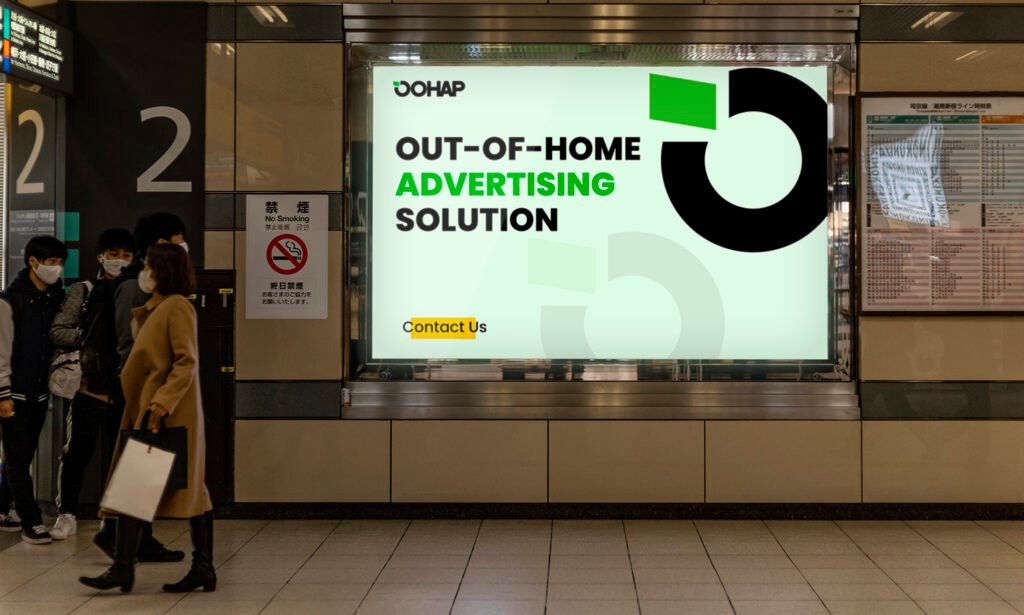
Imagine a future where billboards, bus stops, and other out-of-home media can automatically change their content to match the demographics of people walking or driving by. Or what if OOH media could detect when a nearby store is having a sale and direct passersby to that location? These possibilities are not as far-fetched as they may seem. The potential applications for OOH media are endless with the rapid development of artificial intelligence and machine learning algorithms.
Introduction
Artificial Intelligence is changing the future of Out-of-Home Advertising to survive. By combining AI and machine learning algorithms, big data, and Internet of Things technologies, Intel and other partners are showing how to revolutionize OOH advertising by targeting audiences with specific content tailored specifically to them.
AI is already helping marketers understand their target audiences, what they want, and what they are willing to buy
Hence, it is only a matter of time before machine learning algorithms tell marketers exactly how to market to them.
Machine learning can eliminate the guesswork of capitalizing on massive amounts of data, providing insights that can be applied in AI-powered ad campaigns.
“One example of how machine learning can optimize creative elements of your ads is using historical data to identify which colors and messages connect with consumers and generate sales. When advertisers use AI-based tools or machines to learn, algorithms consider all the information and data they have about a subject matter and leverage that information to make the best decisions.”
Together with Artificial Intelligence & Machine Learning algorithms, this data will help organizations make better, more calculated decisions informed by local intelligence. Artificial intelligence will integrate data from many devices and access points, finding patterns to understand a vast dataset. By consolidating all the data sources available, including analyzing customer emotions using machine learning algorithms under supervision, the ability to increase demand sensing and forecasting accuracy can be achieved.
Getting personalized experiences at scale starts with a single Customer Data Platform that can leverage machine learning algorithms to uncover new patterns in customer data and learn over time. Companies can then leverage the helpful data to design chatbots or train them to perform better, ultimately improving customer experiences and services. Humans can’t analyze the amount of data alone for useful purposes. Still, with machine learning and artificial intelligence, many companies are already finding ways to use this data to dramatically improve parts of their businesses.
Companies aggregate their media, creative, and marketing data into one big data set with all other company information, firing up machine learning algorithms to recommend the next promotions, pricing points, products, and media plans. Businesses consolidate data, whether marketing or not, to drive machine learning and artificial intelligence-driven insights at speeds up traditional agency methods.
Artificial Intelligence might seem like something from the future, but it’s already being used around us. AI is producing data in real-time, improving existing ads for maximum effectiveness. Such companies subsequently leverage demographics and user behaviors to deliver recommendations for new music, movies, and TV, catering to customers’ preferences and providing a personalized experience.
This blog post will explore the potential of AI and machine learning algorithms for outdoor advertising in the OOH industry. From targeted content to real-time analytics, read on to learn more about how these technologies can revolutionize how we interact with outdoor media.
1. How do you use Artificial Intelligence and machine learning algorithms in the OOH industry?
The OOH industry is rapidly evolving and adopting new technologies to keep up with the changing landscape. One of the most significant changes in recent years has been the introduction of artificial intelligence and machine learning algorithms.
These technologies can revolutionize the OOH industry, making it more efficient and effective. Here are some tips on how to get started with using AI and machine learning algorithms in the OOH industry:
1.1. Getting more knowledge on AI and machine learning.
If you want to use these technologies in your business, it’s important to understand how they work. Many resources are available online, including articles, videos, and courses. Get more into these topics to better understand their potential applications in the OOH industry.
1.2. Identify potential use cases for AI and machine learning in your business.
Think about how these technologies could be used to improve your OOH campaigns. For example, you could use machine learning algorithms to analyze data from past campaigns to identify patterns and optimize future campaigns accordingly. Or you could use AI-powered tools to automate ad creation or media planning tasks.
1.3. partner with an AI/machine learning provider.
If you don’t have the internal resources to develop these technologies, partnering with an AI/machine learning provider can be a great option. This will give you access to the latest tools and allow you to take notice of the potential of artificial intelligence and machine learning algorithms. These technologies can help with everything from identifying prime locations for billboards to optimizing campaigns for maximum impact. Getting started with using AI and machine learning algorithms for outdoor advertising doesn’t have to be difficult or expensive – there are several free or low-cost tools available.
To get started, identify a few specific problems you would like to solve with AI and machine learning. For example, you can use these technologies to improve your audience targeting accuracy or reduce the cost of producing creative materials. Once you have identified specific problems, research which AI and machine learning algorithms are best suited to solving them.
1.4. Testing your problems out
Many AI and machine learning platforms offer free trials, so take advantage of these to see how well the algorithms perform on your data. After testing out a few different algorithms, you should know which ones are most effective at solving your specific problems.
Implementing AI and machine learning algorithms into your OOH campaigns can help you achieve better results while saving time and money. Get started today by identifying a few problems you would like to solve and researching which algorithms are best suited to solving them.
2. The Benefits of AI & Machine Learning for the OOH Industry
Artificial intelligence and machine learning are two of the most buzzed-about technologies in the tech industry today. And for a good reason – these cutting-edge technologies have the potential to revolutionize nearly every industry, including the out-of-home advertising industry.
2.1 Artificial Intelligence & Machine Learning can create more targeted and effective OOH campaigns. For example, using data collected from sensors and other sources, AI can help identify patterns in human behavior and predict when and where people are most likely to see OOH ads. This information can effectively target OOH ads, resulting in increased brand awareness and ROI.
2.2 Machine Learning can also analyze large data sets to identify trends that would otherwise be difficult to spot. This information can be used to make better decisions about media buying, placement, and timing for OOH campaigns. In addition, Machine Learning can automate tasks such as campaign optimization and reporting, freeing up time for OOH professionals to focus on strategic planning and creativity.
2.3 By leveraging these technologies, OOH professionals can create more targeted and effective campaigns that deliver real client results. Artificial Intelligence & Machine Learning have tremendous potential for the OOH industry which helps marketers and business professionals for maximum exposure of their business.
3. How can AI & Machine Learning be used in the OOH Industry?
The use of artificial intelligence and machine learning algorithms has the potential to revolutionize the OOH industry. Here are some ways that AI and machine learning can be used in the OOH industry:
3.1. Optimizing media buying: AI can be used to analyze large data sets to identify patterns and trends that can be used to optimize media buying. For example, AI can identify which OOH locations are most effective for reaching a target audience, what time of day is most effective for reaching a target audience, and so on.
3.2. Automating creative: AI can be used to automatically generate creative for OOH campaigns. For example, AI can be used to create custom visuals based on a set of brand guidelines.
3.3. Targeting audiences: AI can be used to target specific audiences with OOH campaigns. For example, AI can identify individuals likely to respond positively to a particular message or offer and target them with relevant OOH ads.
3.4. Measuring campaign performance: AI can measure the performance of OOH campaigns in real time and provide insights that can help improve future campaigns. For example, AI can track how many people see an OOH ad and take action as a result (e.g., visiting a website or making a purchase).
4. The Future of AI & Machine Learning in the OOH Industry
Artificial intelligence and machine learning algorithms have the potential to revolutionize the OOH industry. Here are some ways that AI and machine learning could shape the future of OOH:
4.1. Smarter targeting and real-time optimization of OOH campaigns: AI can help make OOH campaigns more targeted and effective by analyzing data such as demographics, location, time of day, weather, etc. In addition, AI can help optimize OOH campaigns in real-time based on changes in these factors.
4.2. Increased personalization of OOH messages: AI can be used to create more personalized OOH messages tailored to individuals’ specific needs and interests.
4.3. Improved measurement and analytics: AI can help improve the measurement and analytics of OOH campaigns, providing insights into what is working well and what could be improved.
4.4. Enhanced creativity: AI can help generate new ideas for OOH campaigns that are outside the scope of what humans would think of on their own.
4.5. Greater efficiency and cost savings: AI can help make OOH campaign planning, execution, and measurement more efficient and cost-effective.
5. Some examples of machine learning and Artificial Intelligence in action within the OOH industry
In the world of out-of-home advertising, machine learning and artificial intelligence are already making waves. Here are some examples of how these cutting-edge technologies are being used in the OOH industry:
5.1. Smarter targeting: Machine learning algorithms are used to analyze vast amounts of data to identify patterns and trends. This information is then used to target ads more effectively, ensuring they reach the right audience at the right time.
5.2. Improved creative: AI-powered creative tools generate more effective and eye-catching OOH ads. By analyzing data points like demographics, location, and time of day, these tools can create custom ad campaigns guaranteed to get attention.
5.3. Automated buying: Machine learning is also used to streamline the OOH buying process. These algorithms can predict the most effective inventory for a campaign by analyzing past purchasing behavior. This means OOH buyers can save time and money automatically by choosing the best ad placements.
5.4. Increased ROI: OOH campaigns that use machine learning and artificial intelligence are seeing increased ROI. With more targeted and effective ads, automated buying, and improved creativity, it’s no wonder savvy advertisers are turning to these cutting-edge technologies to get ahead in the competitive world of out-of-home advertising.
6. Hyper-targeting versus mass targeting
The type of data that is currently being acquired is fascinating. The ability to target customers via mobile with the same message or a series of related news, a product offering, and the position of the closest store is a feature of strategic places or businesses like malls, health clubs, or elevators.
Hyper-targeting could not, however, be effective for all brands. Indeed, reaching out to someone outside your narrow target audience is not always a mistake. Additionally, it helps spread your brand’s word of mouth and increase interest in it.
You lose all the advantages of connecting with others outside of that group. This was once considered to be a shortcoming of living away from home.
Through careful segmentation, marketers have traditionally sought to target very specific populations. These demographic groups frequently have a history of where they have lived. For instance, a store would target customers who frequently visit one of its rivals’ stores. In this approach, the history of location data serves as the main foundation for creating a bespoke audience profile.
When so many advertisements compete for viewers’ attention, consumers may not be drawn in by eye-catching graphics or a snappy phrase that assumes a certain target. Therefore, it is anticipated that future developments in billboard personalization will increase.
The interaction with out-of-home marketing may change in the future thanks to ads that change in response to user reactions. What may this mean for the future of the advertising industry in general, and the creative process in particular, if an AI writes its material, chooses successful imagery, and adapts? Do we want to live in a society where advertisements are becoming more tailored?
Conclusion
In conclusion, artificial intelligence and machine learning algorithms have the potential to revolutionize the OOH industry. With the ability to process vast amounts of data quickly and efficiently, these technologies can help OOH marketers better understand consumer behavior and trends. Additionally, Artificial Intelligence & Machine Learning can help make the OOH industry more efficient and effective by automating various tasks related to planning and buying OOH media.
The objective has changed with Artificial Intelligence & Machine Learning. Marketers focus less on brand recognition and more on seeing sales from their OOH advertisements. Advertisers should start to see actual revenue from digital out-of-home advertising and AI.
Today’s typical consumer is better educated, expects firms to care more about them, and wants marketing to be more thoughtful. Instead of using huge data, they prefer more conversational advertisements. AI technology can alleviate these problems by assisting marketers in customizing content and enhancing its engagement.
