
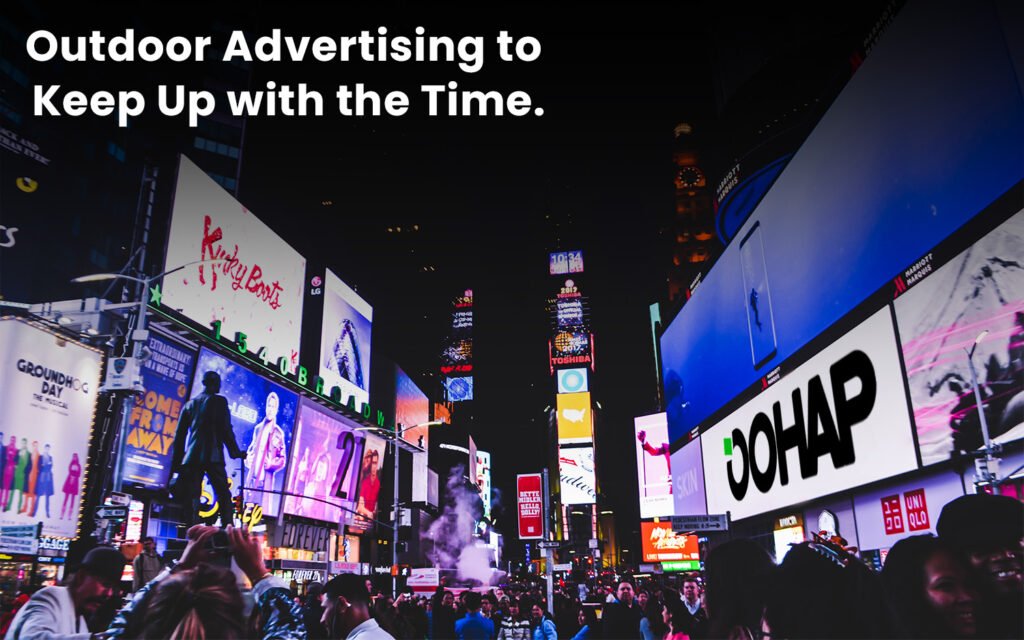
Emerging technologies in outdoor advertising continue to evolve at breakneck speeds as new brands emerge and old ones expand their portfolios. Technology is a huge part of this evolution, and it’s no surprise that technological advancements are impacting how we advertise on the street. Whether you stay on the fence or jump straight into the deep end, it’s best to know what these technologies can do for your brand before investing in them.
Outdoor advertising is the most widely and rapidly growing marketing medium in the world today. Outdoor advertising, from billboards to signs, has evolved tremendously over the last ten years as technology plays a more prominent role. Emerging technologies such as virtual reality (VR) and augmented reality (AR) are being integrated into innovations in outdoor marketing.
To catch the attention of consumers on the go and provide them with personalized content at every moment of their day, companies must move beyond static displays and static communications messages.
Outdoor advertising is still the dominant form of media for many companies and brands, but it’s not enough. Consumers are looking for a little more than just traditional billboards or bus shelters. As technology continues to evolve, today’s businesses must keep up with the changes or risk becoming increasingly outdated in a relatively short period.
We will look deeper at some of these trends and technologies and explain why they will shape Out-Of-Home advertisements.

- Digital outdoor advertising
Digital billboards are a form of outdoor advertising that offers greater flexibility than most out-of-home advertising media. Technological advances have made digital outdoor advertising more attractive for brands for quality and quantifiability. In addition to the technological advances of digital out-of-home advertising, digital out-of-home advertising is increasingly allowing advertisers to measure impressions on an audience with greater precision. DOOH is one of the fastest growing forms of advertising today; digital billboards offer some advantages over technology used in online display ads, like targeting and enhanced data on traffic, but at the same time are impervious to ad blockers, and users cannot skip OOH ads. DOOH also allows advertisers to instantly modify their messages at different locations,
Billboard advertising is one of the most cost-effective forms of advertising. It must be remembered that outdoor ads are reaching out to larger audiences. Outdoor advertising has evolved from traditional means into digital technologies, which are much more able to grab a customer’s attention than a static billboard. One of the many capabilities of digital media, as opposed to traditional billboards, is using special effects and motion within the ad. Technology has changed all of this, with digital displays increasingly replacing the static, outside-of-home ads that used to appear on billboards, bus stops, and other high-traffic areas like shopping centers and gas stations.
Ads are placed strategically in high-traffic areas to improve exposure. Typically, this advertisement is placed in a public space or along the street. Media resources could lead to innovations in advertising. We can make wall graphics, window graphics, banners, and printed advertising; there are so many other applications. Improved inventory attribution — the validation of audiences exposed to our media — demonstrates outdoor advertising is far more relevant and powerful than anyone has ever imagined. Digital advertising capabilities on Billboard include social media integration, countdowns, days/week partying, real-time updates, conditional content, weather, and temperature.
Digital billboards are made with built-in light sensors, which produce light dim in the daytime and brighten in the evening, ensuring that your ads are seen 24/7 by anyone who comes across them. People browsing the web are generally experts at avoiding pop-up ads and banners; however, they do notice billboards, street signs, or other visually attractive items.
2. Interactivity with your smartphone
There are two easy yet effective options to drive engagement with the viewer using outdoor ads on digital billboards, advertising at bus stations, digital street furniture, and other forms of location-based OOH. Several clever, creative, and innovative ways of using outdoor advertising enable smartphones and electronics brands to connect with consumers, be they on a static billboard or a digital one. Outdoor advertising offers a unique solution for reaching people in the physical world and their mobile devices with relevance built in from a close-in perspective. Out-of-home is not the exception that needs to be relied upon, and it is an excellent medium that allows the potential of mobile technologies and generates additional value to the advertising campaign.
This campaign is an ideal example of how outdoor advertising and smartphone technologies such as QR codes can work well together to create seamless user experiences and boost consumer engagement. QR, or SMS technologies, allow consumers to instantly access more information about an advertiser through mobile devices. Combined is expected to build something that replicates a billboard message onto a different platform and provides a means of measuring the interaction between advertising and consumers.
3. Artificial intelligence in outdoor advertising
Artificial Intelligence (AI) is changing the future of Out-of-Home Advertising to survive. With the help of AI, digital outdoor advertising offers limitless opportunities for making customers aware of products and services. Out-of-home marketing and outdoor advertising are changing with the use of artificial intelligence.
New technologies push the advertising industry with AI, machine learning, voice search, and digital out-of-home (DOOH). By combining Artificial Intelligence /machine learning, and big data, Intel and other partners show how to revolutionize OOH, advertising by targeting audiences with specific content tailored to them. Its use of AI is also an example of an ad industry trend toward extreme customization and targeting customers.
In the outdoor advertising space, AI is focused on providing customized, interactive advertising content for customers. For example, The AI-powered ad space offers a platform that analyses data from all advertising accounts and customer databases and then uses machine learning technologies to target, execute, and optimize ad campaigns.
AI could allow more highly targeted out-of-home ads, such as weather triggers, in which relevant creative would be served automatically on a billboard. Machine learning and AI can help target ads according to the conditions outside of the home, and information collected regarding increased sales could be used by AI to focus on more targeted ads.
4. 3D Ads on outdoor media advertising.
3D billboards are becoming a preferred advertising technique for most innovative brands. Marketing takes a look at some recent 3D billboards that amazed the world. Times Square is the latest location where people see high-tech, 3D billboard ads. The 3D billboard advertisements available here are made using customized LED modules of different appliances, appliances, tools, commercial tools, etc., with an attractive and aesthetic appeal.
The 3d billboard ads made using advanced technologies provide sharp patterns which are durable. These advertisements require no extra parts to be attached to billboards, making them a relatively cost-effective form of 3d wow. These hyper-realistic, larger-than-life advertising billboards for outdoor advertisement are rising all over. 3-D OOH billboards are emerging as new high street technology with powerful implications for how marketers make their campaigns come to life.
Out-of-home advertising offers the best creative canvas for making a big impression in a market. Opportunities to advertise in major metro cities can help you reach your target audience. In an age where advertisers are fighting for consumers’ attention, digital, multi-dimensional campaigns are expected to continue to take center stage in contemporary marketing.
3D billboards also provide a place for graphic designers to showcase their artistic skills and creative ideas, transforming these advertisements into better art pieces.
5. AR-enabled billboards
Out-of-Home (OOH) ads are the traditional form of advertising in the outdoors. OOH, advertising could complement AR, being an interactive user engagement and user-experience media, which could create much buzz in the target audience.
TVs, smart speakers and other connected-home devices are changing how brands engage with their audiences in their homes by providing new interactive experiences and targeting capabilities; AR and other AI-driven technologies are also appearing in OOH ads. People see an increasing trend in integrating Augmented Reality into outdoor advertising to deliver innovative, unconventional campaigns, with AR working perfectly in advertisers’ brands. AR has seen rapid growth over the last couple of years and is being adopted more by advertisers to create engaging campaigns. By closing the gap between the real world and digital, augmented reality out-of-home advertising opens up opportunities for companies to transform regular marketing strategies into engaging experiences. AR out-of-home media can improve brand and product engagement by providing a great experience.
6. Live streaming on Billboard
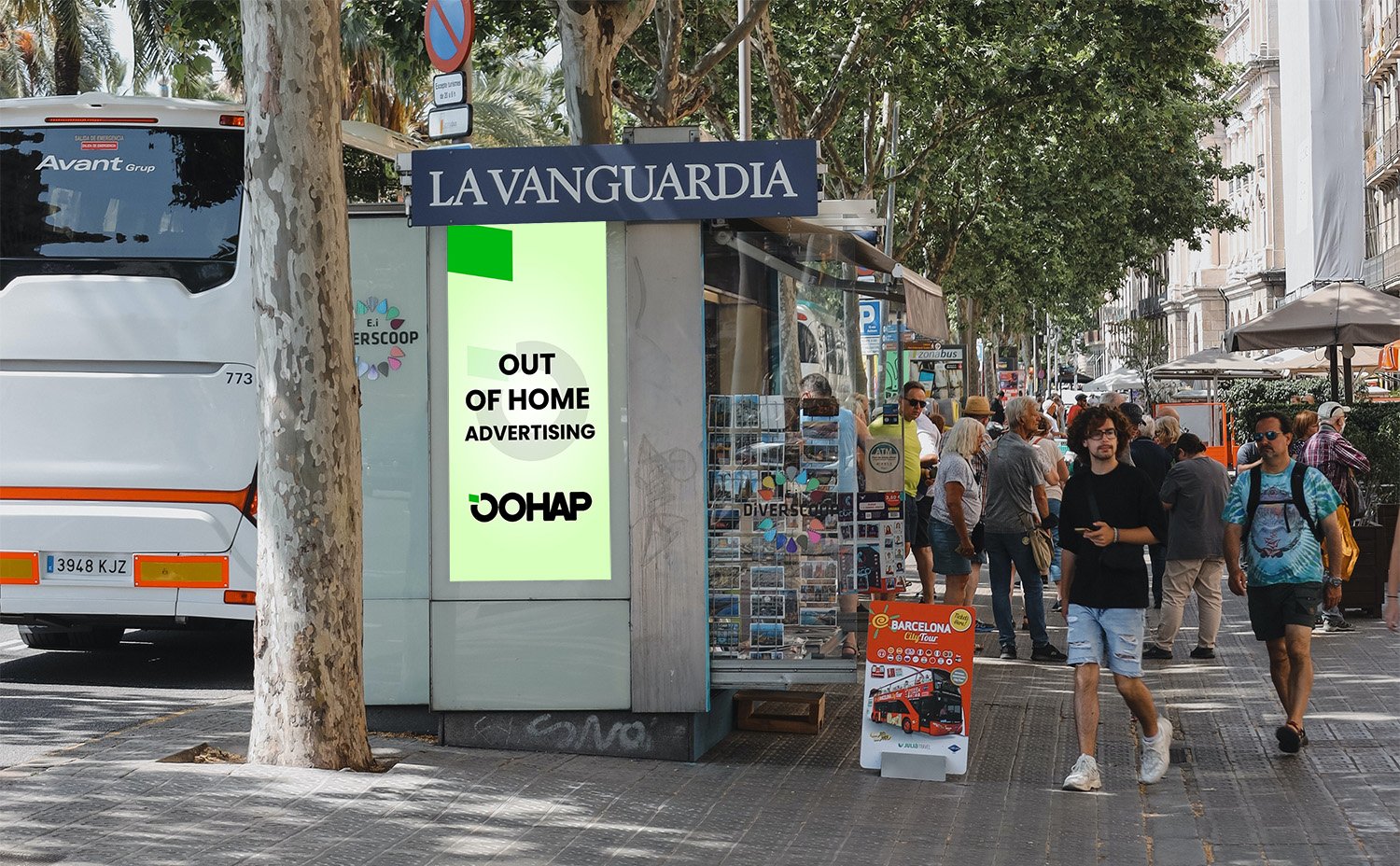
Outdoor advertising has now come a long way. Live streaming on digital billboards allows marketers to attract more audiences and grab their attention.
It allows marketers/ publishers to showcase their live stream ads and event over digital billboards, targeting more audiences and more coverage among the people. It will enable a great reach to our target audience, and people will take more interest in the topic.
7. Power of Storytelling
In marketing, storytelling provides a way of connecting with consumers like no other. Like, brands can use storytelling to create relationships and connections with others. Through storytelling, brands need to tap into emotions within their marketing campaigns. When brands tell stories, consumers can relate to an experience, leading to strong emotional connections with a brand.
When you tell a story that serves consumers’ needs, you strengthen your role as a positive. Your brand and messaging must have a supporting role in the story and be a key part of your decision. In other words, when telling the story behind your brand, you should do so in a way that will connect you to your target audience. At the same time, marketers also need to provide opportunities for consumers to share stories about their experiences with your brand. Whether you are telling your brand’s story via a video, a blog post, or a quick post on social media, narratives can make a difference in helping you grow your business.
First, due to great storytelling, your brand’s stories can stay with your audience’s memories long after you have told them. Using art, and great visuals, across marketing and media, can significantly elevate your content and make a co-related story for consumers. Telling a great story that touches people’s hearts and resonates with them emotionally will enable you to make a stronger connection and establish your brand and products.
8. Data-driven Approach
Rise in data-driven approaches to determining the success of OOH advertising campaigns. Marketers now have multiple, efficient ways of planning, running, measuring, and learning from their OOH ad campaigns. Advances in data and OOH technologies now allow brands to leverage their data to build and target audiences in the target audience. Data combined with OOH gives marketers a powerful way to reach the audiences they want. Smartphones now provide advertisers with a way to interact with consumers through digital billboards, placing data-driven campaigns. Data-driven OOH offers an unparalleled ability to target, making it the new data-driven media option for marketers. Outdoor campaign measurement enables advertisers to build more impactful campaigns. Our in-house data science team lets media planners, buyers, and advertisers get data-driven insights throughout the OOH campaign lifecycle. OOH, advertising brings together data, analytics, map visualization, and media planning capabilities so that OOH experts can base their strategies on consumer insights.
Conclusion-
As outdoor advertising technology progresses and changes, it is important to stay on top of the trends. Emerging technologies will help you get ahead of your competitors by keeping projects on time and budget. By using this guide for outdoor advertising technology, you are empowering yourself with the knowledge you need to take advantage of these emerging technologies. It will save you valuable time and make your job easier when looking at emerging technology in your projects.
